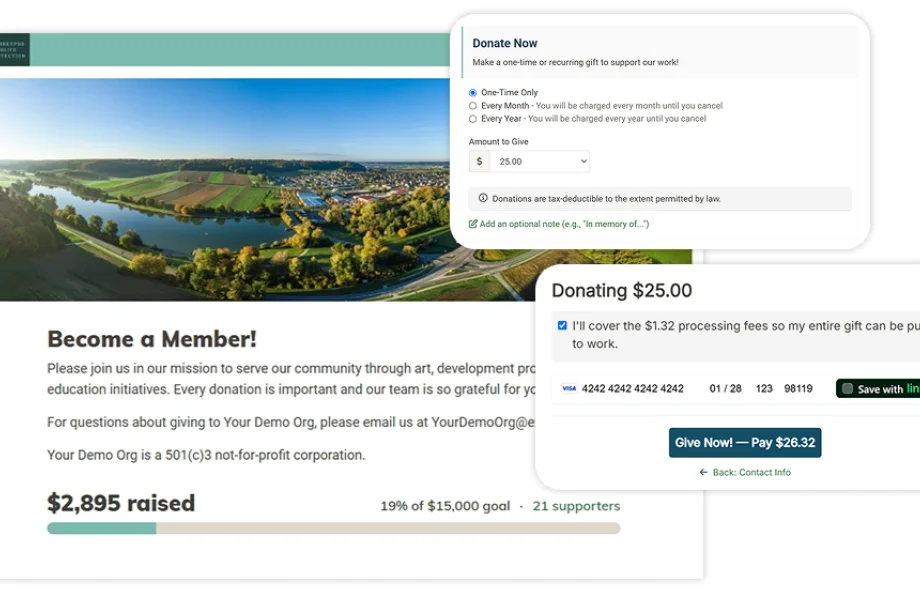
Quick answer: The best nonprofit fundraising software depends on budget and needs. Zeffy and Givebutter offer free, tip-based models; Funraise and GoFundMe Pro (formerly Classy) serve larger nonprofits needing advanced campaigns; Donorbox is strong for simple recurring giving; Bloomerang focuses on donor retention; and MonkeyPod is best for nonprofits that want fundraising, CRM, and accounting combined in one platform.
| Platform | Best for | Pricing model | Standout strength |
|---|---|---|---|
| MonkeyPod | All-in-one nonprofit management | Subscription from $167/mo (billed annually); unlimited data and users | Fundraising + CRM + accounting in one |
| Funraise | Growing nonprofits, broad strategy | Free tier; Standard from $99/mo + 5% platform fee (often donor-covered) | Advanced automation, peer-to-peer + events |
| Givebutter | Small to mid-sized nonprofits on a budget | Free with optional donor tips; flat 3% if tips disabled | Modern interface, engagement tools |
| Zeffy | Small nonprofits that only need fundraising | Fee-free; funded by optional donor tips | Nonprofit keeps 100% of donations |
| GoFundMe Pro (formerly Classy) | Large and enterprise campaigns | Custom / contract subscription | Enterprise scale, Salesforce integration |
| Donorbox | Simple recurring donations | Free tier (2.95% platform fee); Pro $150/mo (lower fee) | Fast setup, recurring giving |
| Bloomerang | Donor retention | CRM from $125/mo; scales by number of records | Retention analytics, donor CRM |
Effective fundraising is the backbone of many nonprofits, and choosing the right software can make all the difference. And there are no shortage of options out there today.
To make the right decision for your organization, you need to weigh factors such as pricing, features, ease of use, and donor engagement tools. This article compares some of the leading nonprofit fundraising software solutions, including Givebutter, Funraise, Zeffy, MonkeyPod, and several other top contenders.
1. MonkeyPod
Best for: Nonprofits seeking a comprehensive nonprofit management tool.
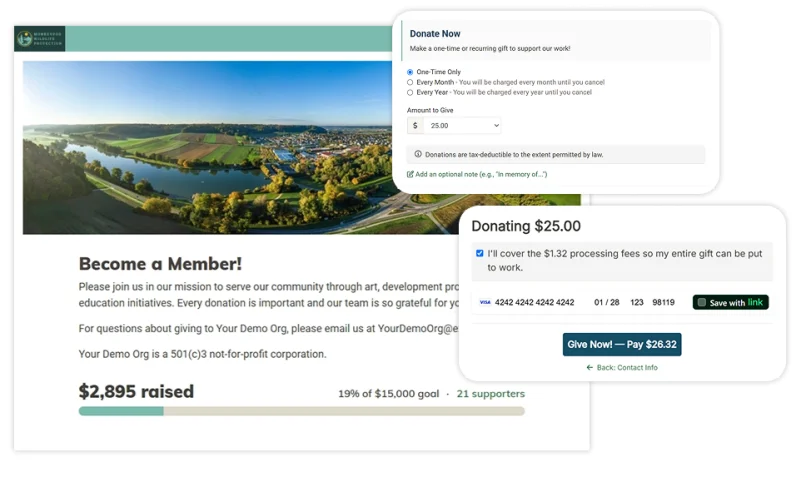
MonkeyPod is an all-in-one nonprofit platform that combines online fundraising, donor management (CRM), and fund accounting in a single system. It places a strong emphasis on automating administrative tasks so nonprofits can focus more on donor relationships.
With MonkeyPod, you can build fundraising pages and forms to collect donations. As donations come in, receipts and thank you notes are sent automatically, and the donors are added to your constituent database so you can engage them again in the future. MonkeyPod also includes built-in email marketing, so you can automatically add new donors to a mailing list so they receive your next newsletter.
MonkeyPod's all-in-one system also includes nonprofit accounting, so in addition to the automations above, the transactions can also be recorded on your books and your budgets can be updated automatically.
Of course, we're a little biased, but if you're looking for one platform to manage all your nonprofit's needs, we think MonkeyPod is a great option.
Pros:
Comprehensive CRM and engagement tools
Automated workflows to reduce manual data entry
Strong financial tracking capabilities
Built-in nonprofit accounting and grant management
User-friendly dashboard and reliable support team
Subscription includes unlimited relationship records, email sends, and users
Cons:
Provides more features than some organizations need
Features are built-in rather than integrated, so users may need to change systems
2. Funraise
Best for: Growing nonprofits that are interested in employing a wide fundraising strategy
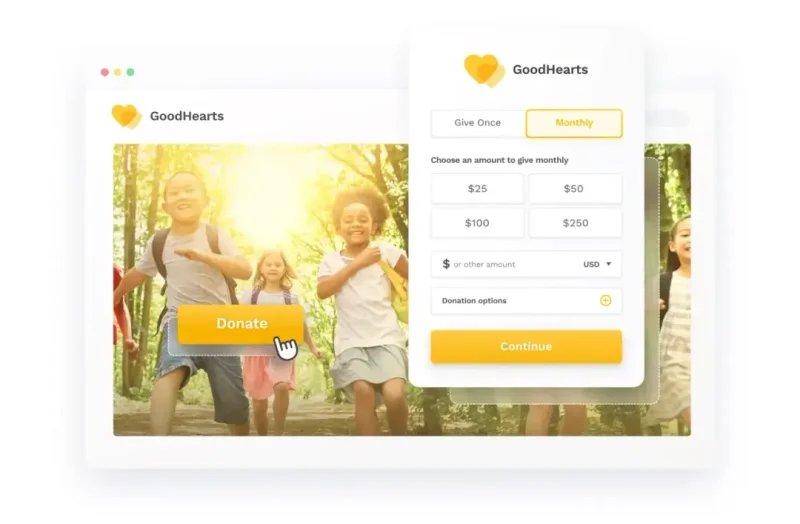
Funraise is a subscription-based fundraising platform for growing nonprofits that combines donation pages, peer-to-peer campaigns, and event fundraising with advanced automation and analytics. Its Standard plan starts at $99/month plus a 5% platform fee that donors can opt to cover, and a free tier is available for smaller organizations.
Funraise offers more options for fundraisers than some other platforms, including fundraising websites (in addition to the traditional pages and forms), event fundraising tools, and peer-to-peer fundraising.
Pros:
Advanced automation and AI-powered fundraising tools
Robust CRM and integration capabilities
Customizable donation pages, forms, and websites
Peer-to-peer and event fundraising tools
Mobile-friendly and highly secure
Learn to fundraise more effectively with Funraise University
Cons:
Higher price point for premium features
Learning curve may be steep for new fundraisers
3. Givebutter
Best for: Small to mid-sized nonprofits seeking an affordable platform.
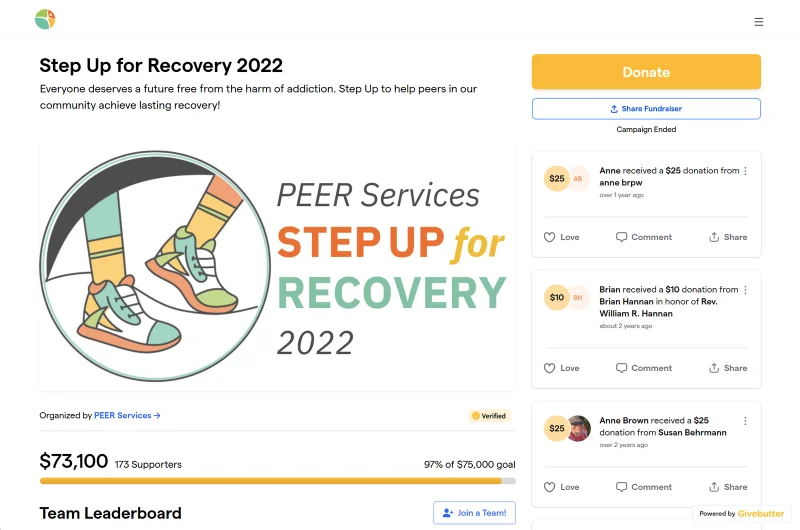
Givebutter is a free nonprofit fundraising platform funded by optional donor tips, offering donation forms, peer-to-peer fundraising, events, and auctions. It stands out for its modern, user-friendly interface and robust engagement features like text messaging and live stream fundraising.
Notably, Givebutter operates on a free model, with optional donor tips covering platform costs instead of charging nonprofits directly. For small nonprofits with serious budget constraints, Givebutter can be a good option, even if they provide fewer features.
However, it should be noted that like most fundraising tools, Givebutter still applies standard payment processing fees on each donation (around 2.9% + $0.30 for cards), and if donor tips are disabled it charges a flat 3% platform fee.
Pros:
No platform fees (optional donor tips)
Peer-to-peer and event fundraising tools
Integrations with CRM and payment processors
Custom branding options
Cons:
Limited customization on lower-tier plans
CRM is specifically designed for donors, not volunteers, program participants, etc.
Some advanced features require third-party integrations
4. Zeffy
Best for: Budget-conscious nonprofits looking to eliminate transaction fees.
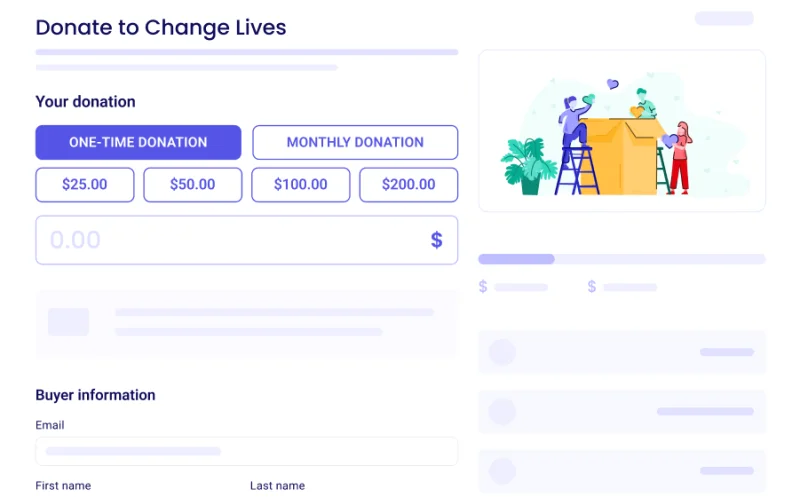
Zeffy is a 100% free nonprofit fundraising platform that charges no platform or transaction fees, funded instead by optional donor contributions. Because Zeffy covers the payment processing fees itself, nonprofits receive 100% of every donation. It offers a range of tools including event ticketing, peer-to-peer campaigns, and donor management.
Zeffy users won't have as many customization options as some of the higher priced fundraising platforms, but if budget is the primary concern for your nonprofit, Zeffy can be a good choice.
Pros:
Zero transaction fees on donations
Easy-to-use interface
Built-in donor management tools
Free event ticketing and peer-to-peer campaigns
Cons:
Limited customization options
Fewer integrations compared to premium platforms
5. GoFundMe Pro (formerly Classy)
Best for: Large nonprofits and enterprise-level fundraising campaigns.
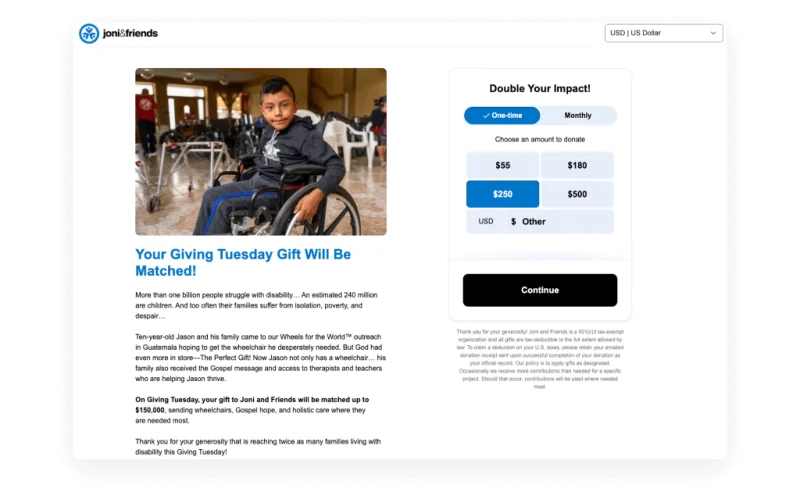
GoFundMe Pro — the platform formerly known as Classy, rebranded in 2025 — is an enterprise fundraising platform for large-scale nonprofits running multiple campaigns. It offers a variety of high-end tools, including crowdfunding, event fundraising, and extensive analytics.
GoFundMe Pro specializes in peer-to-peer fundraising, so if your organization relies heavily on those types of campaigns, it may be a good choice for you. Pricing is custom and contract-based, so you'll need to contact their sales team for a quote.
Pros:
Enterprise-level scalability
Customizable campaign pages with high-end design options
Advanced reporting and analytics
Integrations with major CRMs like Salesforce
Cons:
Custom, contract-based pricing with no public price list
Complex setup and onboarding process
6. Donorbox
Best for: Small to mid-sized nonprofits needing simple, recurring donation tools.
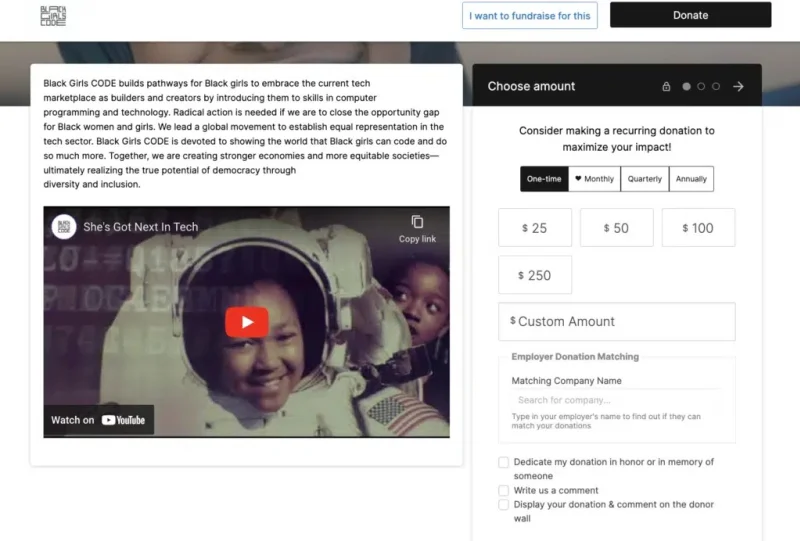
Donorbox is a nonprofit fundraising tool known for fast setup and recurring donations, with embeddable forms that integrate easily into existing websites. It is a good fit for organizations that want simple, reliable recurring giving without a complex setup.
While Donorbox offers a free Standard tier, it charges a platform fee of about 2.95% on donations (in addition to standard payment processing fees) — higher than some other platforms. Its Pro plan, which lowers that platform fee, runs $150/month.
Pros:
Quick and easy setup
Strong recurring donation features
Affordable pricing with a free option
Integration with platforms like WordPress and Salesforce
Cons:
Limited event and peer-to-peer fundraising tools
Fewer engagement features compared to competitors
7. Bloomerang
Best for: Donor retention and relationship management.
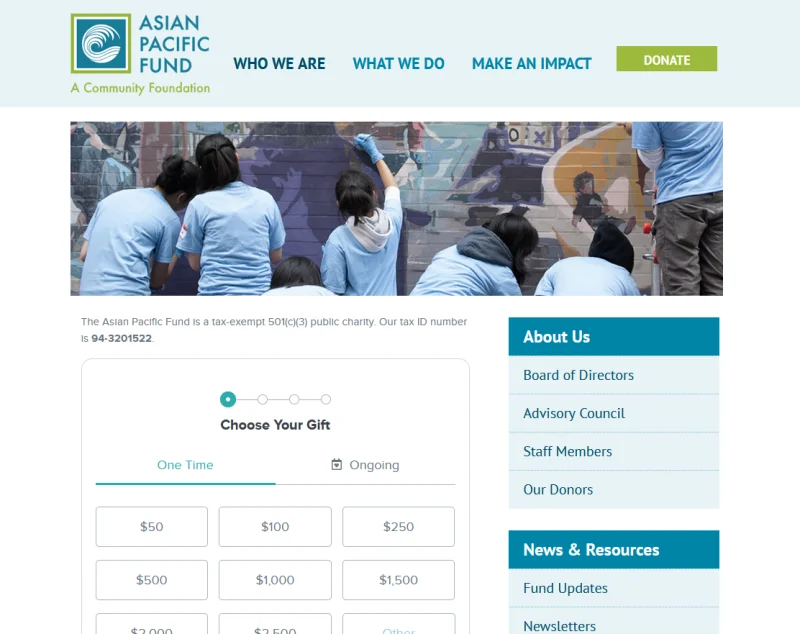
Bloomerang is a donor-management CRM built around retention, helping nonprofits build and maintain strong relationships with their supporters through donor insights and communication tools. It focuses heavily on retention strategies rather than broad fundraising features.
The core of Bloomerang's offering is a CRM that starts at $125/month and scales with the number of constituent records you manage; additional tools like fundraising and volunteer management can be added on to your subscription. Bloomerang also integrates with a wide range of third-party platforms to run the other aspects of your nonprofit.
Pros:
Excellent donor retention and engagement tools
Built-in email marketing and survey features
User-friendly interface
Strong CRM functionalities
Cons:
Not as feature-rich for event fundraising
Pricing can be steep for smaller nonprofits
Volunteer and membership management require add-ons
Final Thoughts
Choosing the right nonprofit fundraising software depends on the size, goals, and budget of your organization. For those prioritizing cost savings, Zeffy and Givebutter offer free or tip-based models. If scalability and automation are key, Funraise and GoFundMe Pro (formerly Classy) provide advanced solutions for growing nonprofits. For nonprofits looking to bring all their operations into one place, MonkeyPod stands out.
By carefully evaluating features, integrations, and pricing, nonprofits can select the software that best supports their mission and maximizes their fundraising potential.
Want to see how MonkeyPod's fundraising features stack up against the competition? Schedule a demo with our team today.
Shopping for a CRM rather than a fundraising tool? Our buyer's guide to the best nonprofit CRM software compares Bloomerang, Neon CRM, Little Green Light, Givebutter, and MonkeyPod on pricing and features.